M2 AI Summit
Using AI to Make Your Team Great
My talk to 340 business owners and leaders at the M2 AI Summit in Christchurch. Two ideas, a live demo of Claude writing a proposal from my own email, notes and CRM, and one small next step.
- Date
- Event
- M2 AI Summit
- Organiser
- M2 Magazine
- Where
- Christchurch
- Audience
- 340 in the room
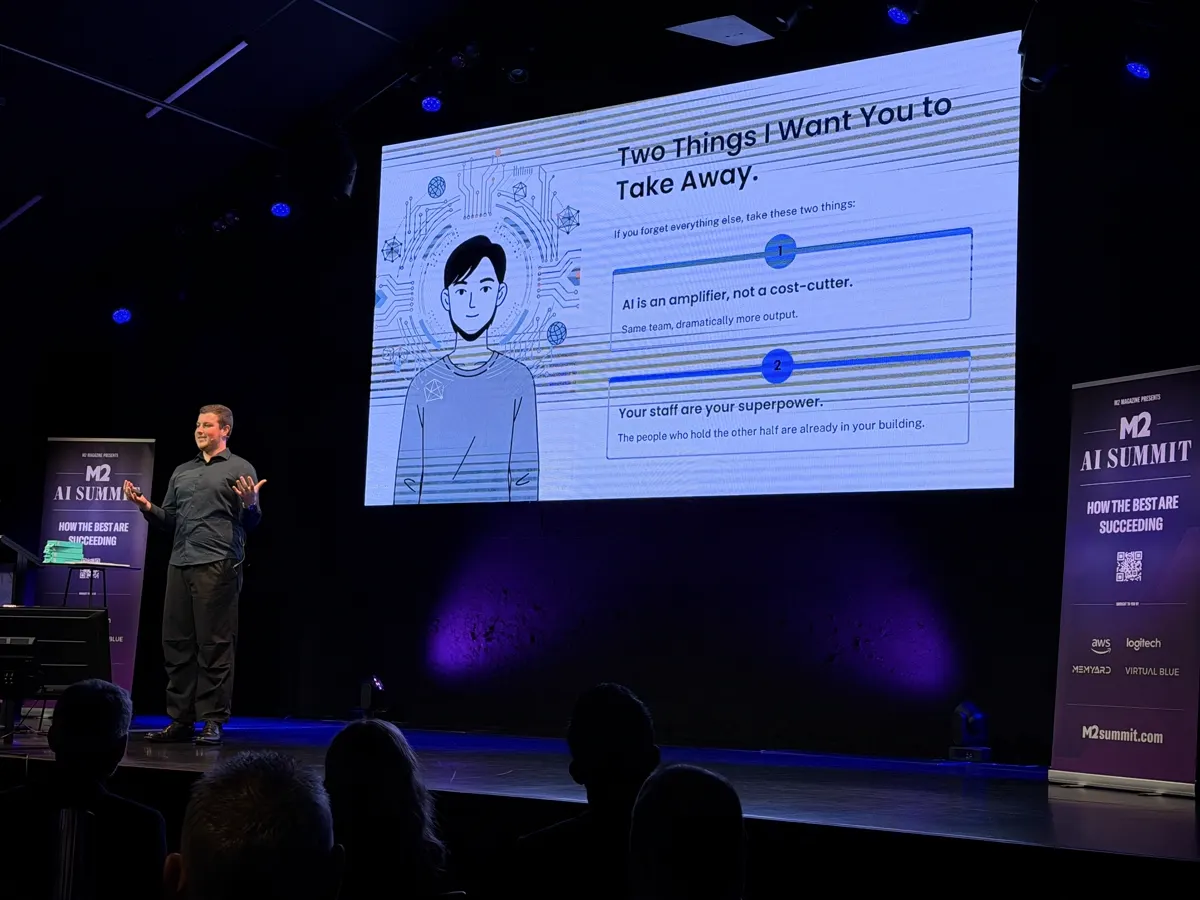
The two things
Traditionally a graduate can't add much to a business until the one or two year mark. They have to learn the business, the processes and the industry first. My opening point was that this has flipped, and I asked the room to take away two things if they forgot everything else.
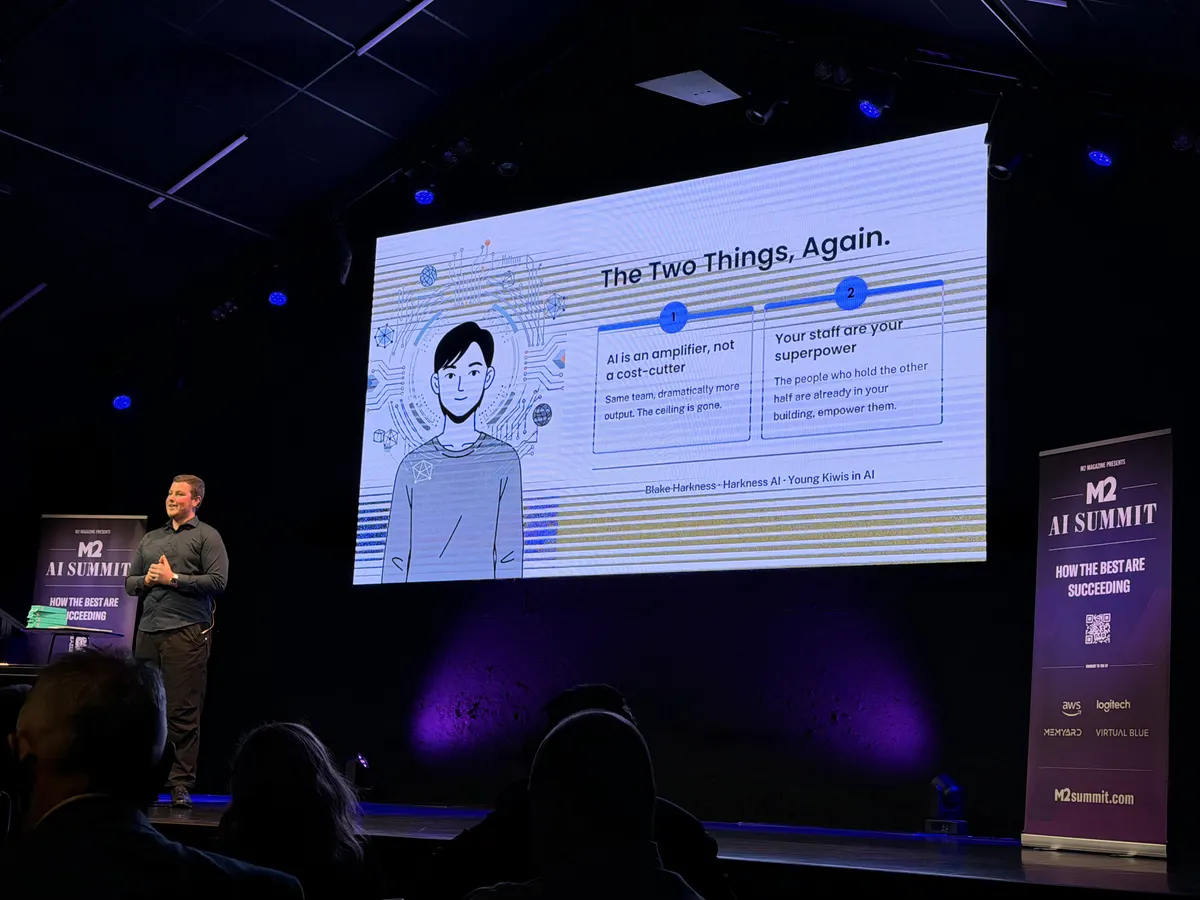
One: AI is an amplifier, not a cost-cutter. There is a lot of talk about cutting jobs, but AI runs on data and knowledge. It needs a good human setup to amplify. Same team, dramatically more output.
Two: your staff are your superpower. They know the processes, the clients and the pain points. The goal is to take the tedious, manual work off their plate, not to take them off the payroll.
The talent paradox
Business owners tell me they need AI skills in their team and can't find them. In the same breath they tell me they don't hire graduates. Nearly 60% of tech employers couldn't take on new work in 2023 for lack of skills (NZTech), while youth unemployment sat at 16.5% in February 2026, three times the national rate (Stats NZ). Those are the same companies.
Generative AI is about four years old. The senior with 25 years in the industry and the graduate started at the same line. The hard part isn't the AI, it's combining it with domain and company knowledge, and your people already have that half. Pair a grad with a domain expert and you get both: the senior learns how to use AI in their work, and the grad learns the business while improving it.
It's already happening. Brodie and Georgia are building AI at ZURU and Trade Me. Zavier Taylor, a second-year civil engineering student, automated invoice checking and job reporting for a pest control company with me.
Last year vs this year
In 2025, agentic AI was hard: weeks of setup, specialist plumbing and fragile demos. In 2026 a Claude licence connects to Xero, Outlook, OneDrive, HubSpot and whatever else you already use. You describe the work, and it does the work. A lot of this is in Copilot too.
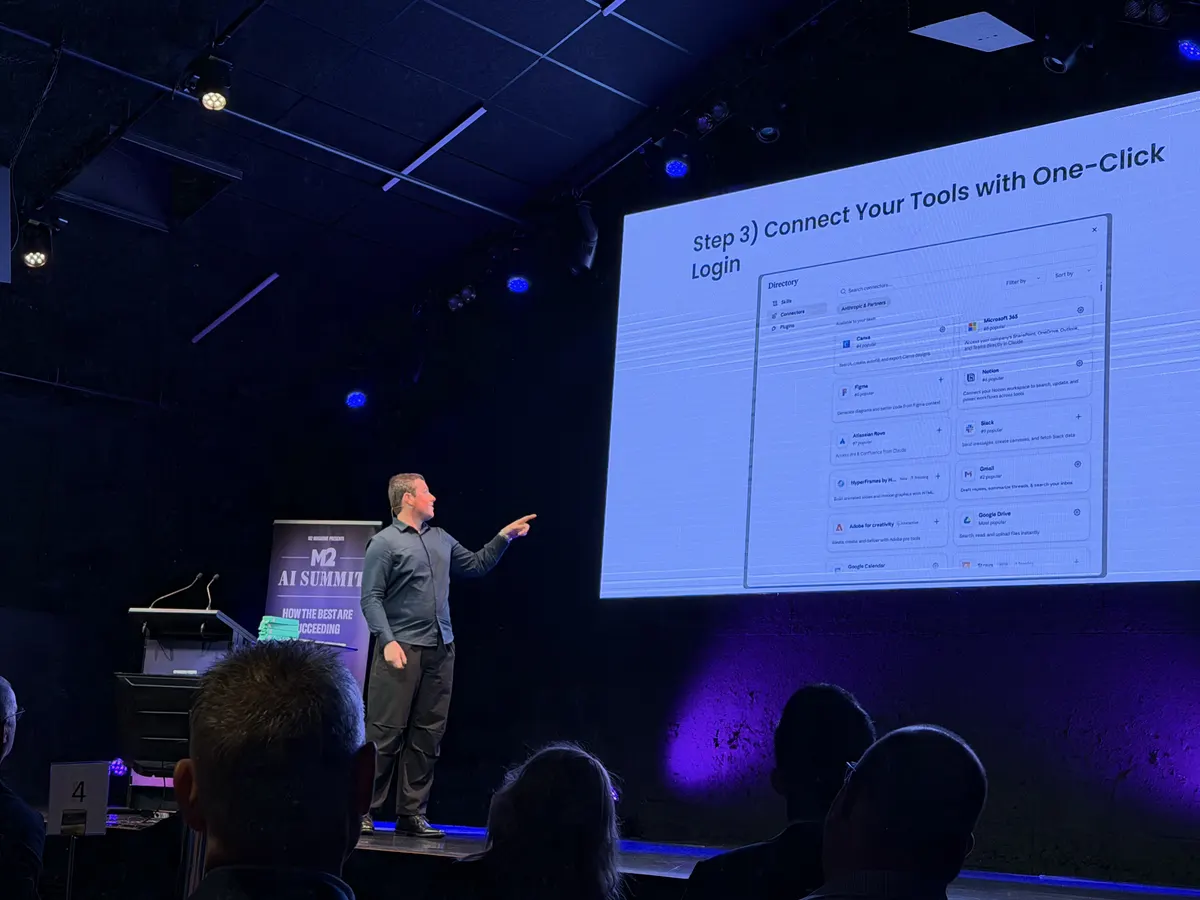
Then I showed it live, with the job I use it for most: writing project proposals. The manual version means searching Gmail for the client thread, digging through Drive for meeting transcripts, cross-checking Notion, pulling a template and stitching it together.
- Outline the process: tell Claude the steps you take by hand.
- Show Claude and give it more context: templates and past examples.
- Connect your tools with a one-click login: email, meeting notes, CRM.
- Save it as a skill, then test and refine it.
Humans stay in control
Now every proposal is one request, pulling from the email thread, the transcript and the CRM. It's accurate because every meeting is recorded and transcribed, so it has the client's exact words. And nothing got replaced. AI does the drafting, the chasing, the collating and the formatting. Your people keep the judgement, the relationships, the creativity and the accountability.
Amplifying a team takes three things: training and education, tools and access, and time to explore. You can't max all three. You can't buy every licence for everyone or give people eight hours a week to play, which is why it pays to have someone in-house who owns it. Graduates are perfect for that.
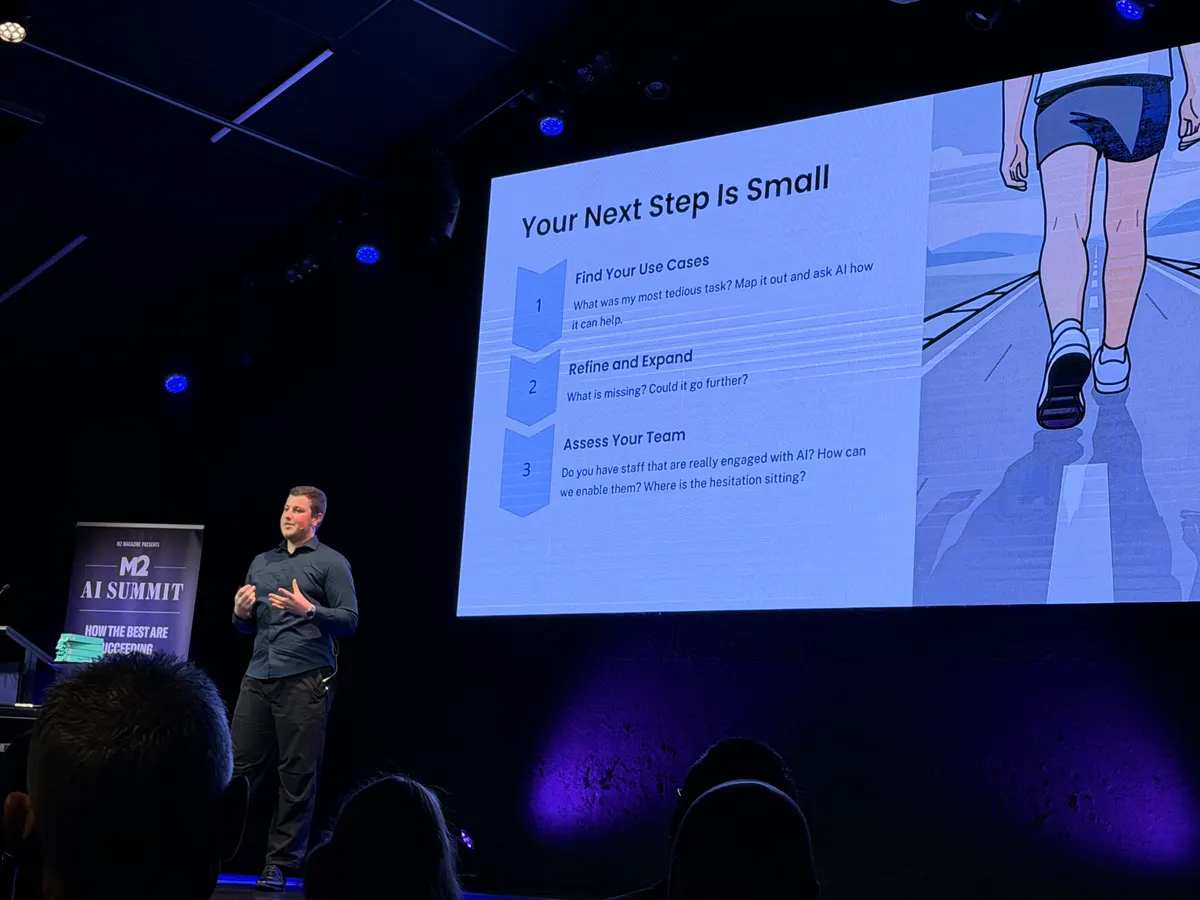
Your next step is small
Start where it pays off fastest: meeting notes and actions, data analysis in the spreadsheets you already have, pulling context together before a decision, first drafts of customer emails, and asking your own files a question. Then:
- This week, run one real task through AI.
- This month, pick one workflow your team hates and amplify it.
- This quarter, get someone AI-native in the room and give them a real problem.
M2 Magazine podcast episodeHow I automate client proposals with Claude
This is the talk as I gave it, written up from my slides and notes. More talks are in the speaking log. Speaking enquiries go through Harkness AI.