Graduating into a World of AI
From mechatronics student to AI engineer
I convened and hosted Graduating into a World of AI at the University of Canterbury through Engineering New Zealand: four lightning talks, a panel and 65 students and young professionals. This was my talk, and the filmed version became my speaker reel.
- Date
- Event
- Graduating into a World of AI
- Organiser
- Engineering New Zealand
- Where
- John Britten Building, University of Canterbury, Christchurch
- Audience
- 65 in the room
- Role
- Convenor, host and speaker
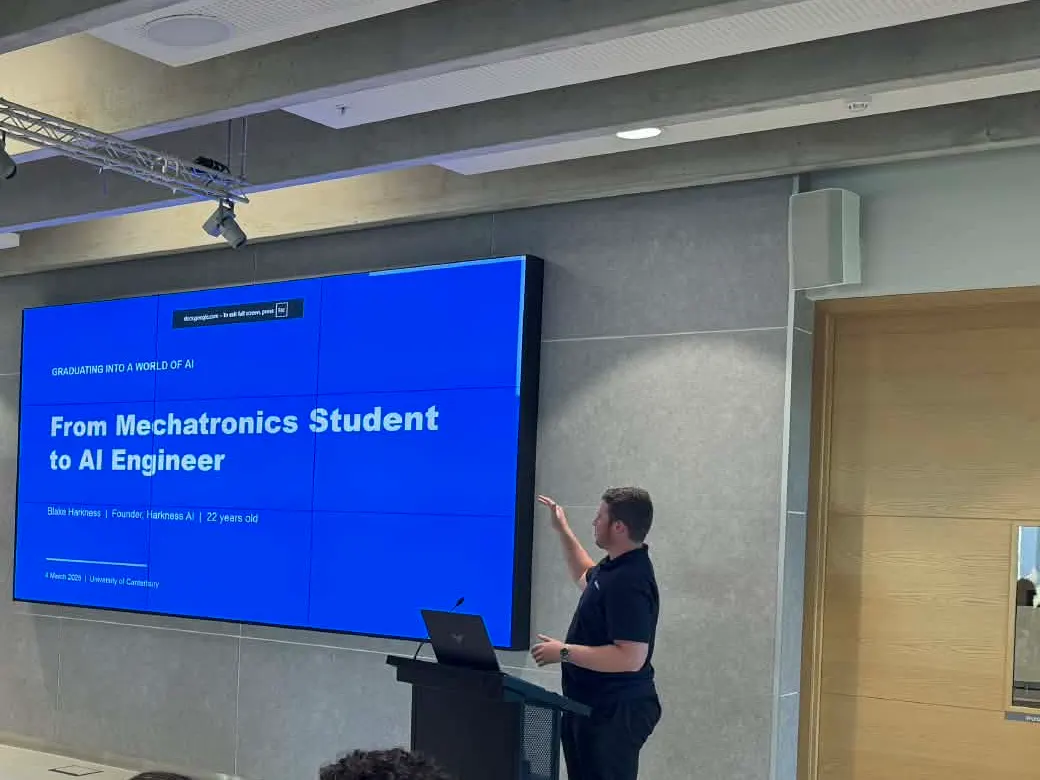
Graduate to AI engineer
Halfway through my degree ChatGPT could do everything I was being assessed on, so I switched my focus to AI. My first job was at a 140-person organisation, fresh out of university, with the brief "go do AI". I taught staff tools like Copilot, built chatbots for knowledge retrieval and automated dashboards and reporting.
Then I hit the ceiling. There's only so much you can do as a grad, I had skills that could help other businesses, and most of the "AI experts" I met were selling hype and hadn't built anything.
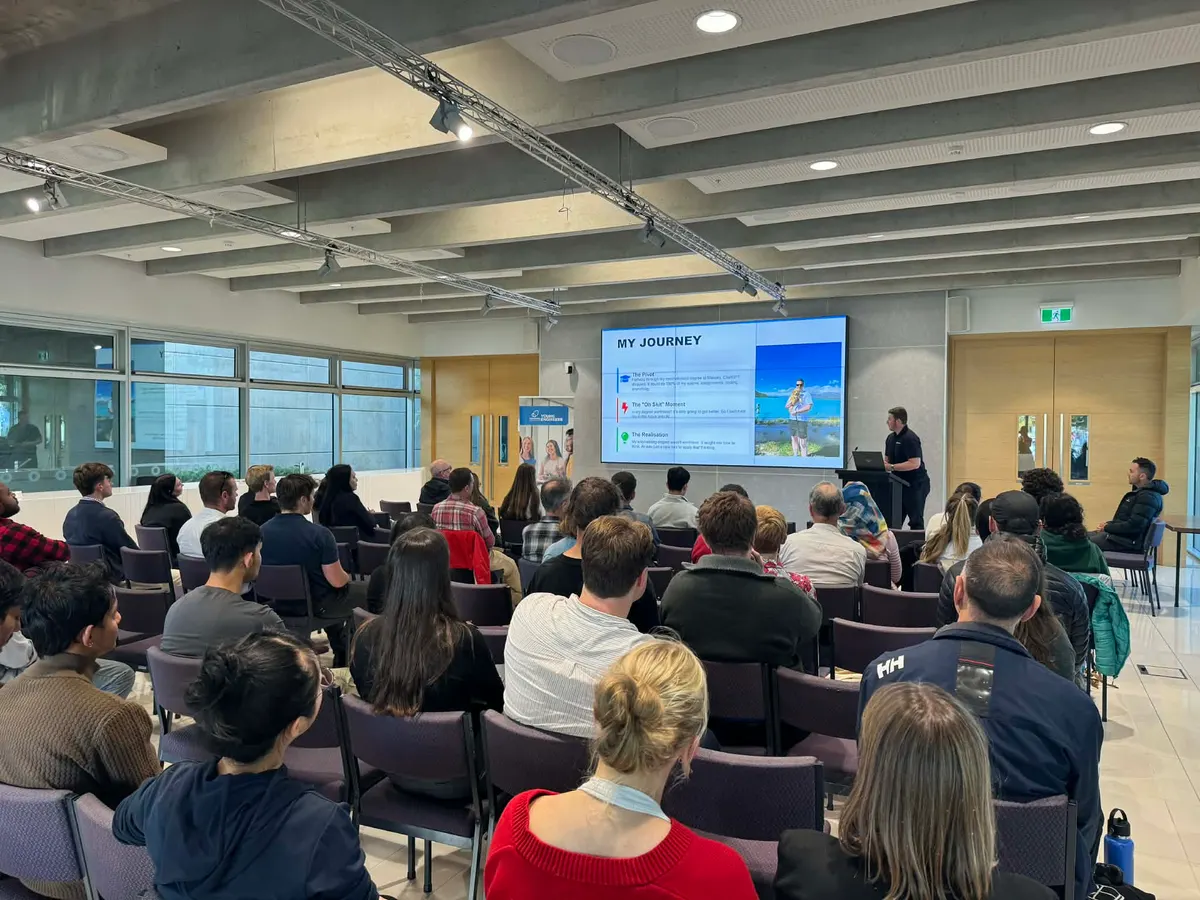
Nobody knows you exist
When you graduate you're a number in a pile of CVs. I tried cold calling businesses on my breaks. It sucked, but it taught me a lot. Then I flipped it: I didn't want to chase people, I wanted them coming to me. Social media is the biggest return on anything I do, and most of my paying clients found me through LinkedIn posts. It costs nothing but time, and it's cringe until it works.
- Nov 2024: graduate engineer at MainPower.
- Feb 2025: started posting on LinkedIn and YouTube.
- May 2025: first paying client from social media.
- Aug 2025: brought on Alex to help build projects.
- Nov 2025: left MainPower to push Harkness AI.
- Jan 2026: Patersons.
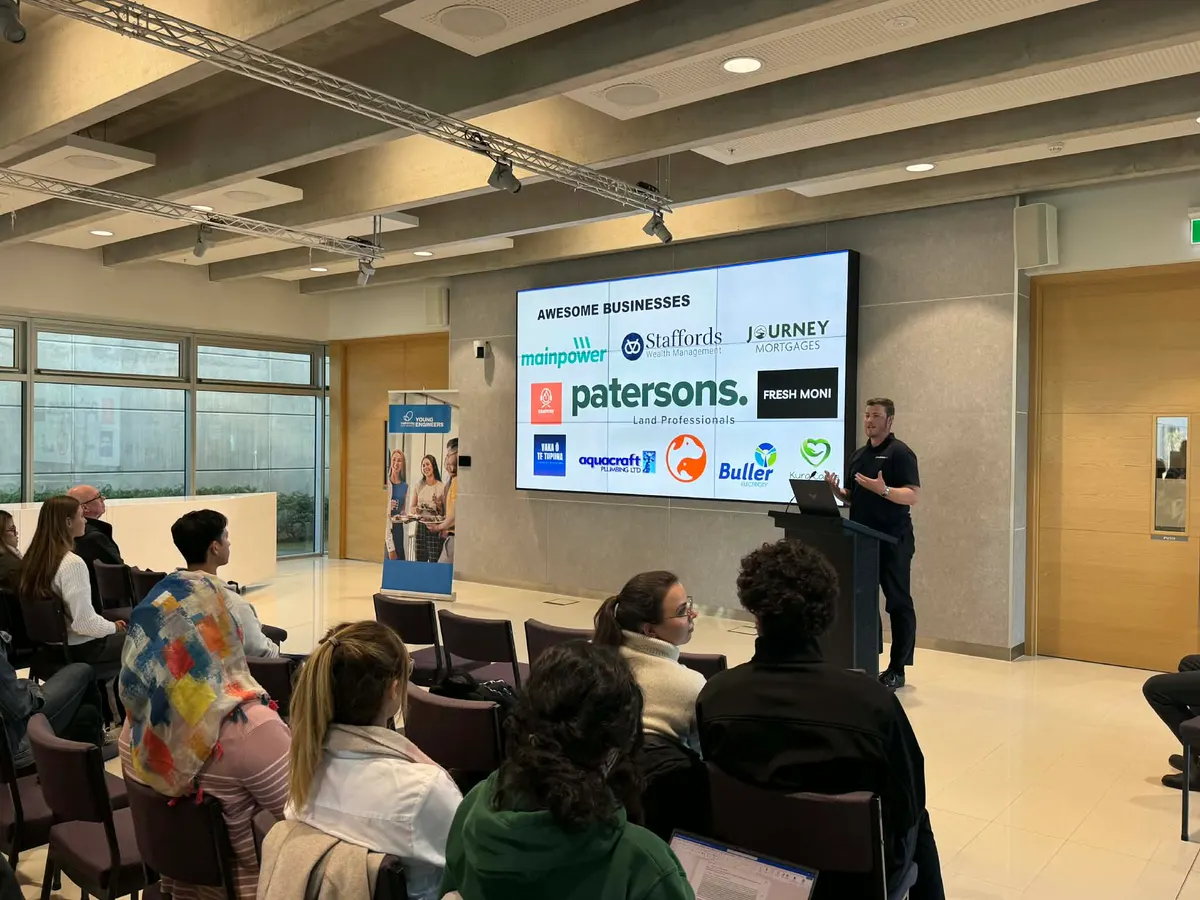
What skills are needed
AI tool proficiency, knowing which of ChatGPT, Claude or Copilot fits the job. Domain knowledge of how an industry actually works. Process automation with tools like Make, Zapier and n8n. And critical thinking: AI is confidently wrong, so verify the output. AI is the intern and you are the senior.
But the number one skill is communication. The maths I showed: ten staff spending two and a half hours a week on a task is 1,300 hours a year. Save two of those hours and it's 1,040 hours, or $104,000 at $100 an hour. Somebody has to find that, explain it and get people to use it.
What I'd tell myself two years ago
Six pieces of advice for the people sitting where I was:
- Start before you're ready. Ship something ugly and iterate.
- Learn AI by building, not by watching.
- Your degree is the floor, not the ceiling.
- Say yes to every opportunity for 12 months, then filter.
- Document everything publicly.
- Find your people. Surround yourself with ambitious humans.
Watch it
This is the talk as I gave it, written up from my slides and notes. More talks are in the speaking log. Speaking enquiries go through Harkness AI.